Check the legal category first
Electric scooter rules do not travel neatly between cities. A place may distinguish private scooters from authorised rental vehicles, impose equipment requirements or restrict particular roads and paths. Age, licensing, insurance, speed and helmet rules may also depend on the vehicle category. Establish which rules apply to the exact scooter and location before treating any mapped route as usable.
Use the current transport authority, government or municipal source rather than a shop listing or an old discussion thread. In the United Kingdom, GOV.UK is a starting point for national guidance and trial information; Transport for London publishes its own network conditions. In New York City, consult NYC DOT for local street guidance and the Metropolitan Transportation Authority for applicable transit rules. These are research starting points, not a statement that your proposed journey is permitted.
Keep the difference between permission and safety clear. A legally available road may still be unsuitable for your experience or vehicle. Conversely, a quiet-looking path may prohibit riding. If the rules are unclear, ask the authority or choose another mode while you verify them. Never infer permission merely because a navigation app draws a line.
Map the difficult moments
Mark crossings, narrow sections, steep descents, tram or rail tracks, poor surfaces and places where a cycle facility ends. Identify where you can safely stop or dismount. Cross tracks as close to a right angle as conditions safely allow, and avoid abrupt turns on slippery markings or metal covers. If a feature exceeds your confidence or the scooter’s capability, walk where permitted or choose another route.
Compare more than one route at the time you expect to travel. A street that feels calm at midday may have loading vehicles, school traffic or crowded entrances in the morning. Walking a proposed section first can reveal sightlines and surface problems that are easy to miss on a screen. A slightly longer, more predictable route may be easier to repeat consistently.
Treat transit as a separate permission check
A scooter that folds does not automatically qualify as luggage. Operators may restrict electric scooters because of battery concerns, space or other conditions, and a network can have different policies for different services. Check the exact operator and service before buying a ticket or relying on a connection. Station staff instructions and temporary restrictions also matter.
Where carriage is allowed, consider the path through the station: lifts, gates, platforms and boarding gaps. Do not ride in spaces where riding is prohibited. Keep wheels and folded parts under control, avoid blocking circulation and be ready to let others pass. If an accessible lift is crowded or unavailable, your backup should not depend on carrying a load you cannot manage safely.
Plan the destination before departure
Find out whether your workplace, campus or accommodation permits storage and charging. These are separate questions. A building might allow a folded scooter but prohibit battery charging, or require a designated area. Obtain a clear answer rather than assuming a reception space or stair landing is acceptable. Escape routes must remain clear.
For outdoor parking, prioritise lawful locations that preserve access. Keep tactile paving, dropped kerbs, entrances and pedestrian routes unobstructed. Do not copy the position of a badly parked rental scooter. Shared operators such as Lime, Dott and Voi may have designated parking arrangements or app rules that apply only to their services; those arrangements do not automatically authorise private scooter parking.
Read conditions, not just forecasts
Rain, frost, strong wind and standing water can change the usefulness of a route. A water-resistance rating is not a blanket promise that riding in bad weather is appropriate, and water damage exclusions may still apply. Follow the manual, reduce exposure and switch modes when conditions exceed safe limits. Avoid riding through standing water, which can conceal holes and expose electrical components to water.
Battery performance and visibility may change on the return trip. A route that worked in daylight may feel very different after dark, especially around poorly lit junctions or temporary works. Check your lights and consider seasonal changes before committing to the same plan all year. Keep enough flexibility to walk, use permitted public transport or arrange another way home.
Judge urban mobility by connection quality
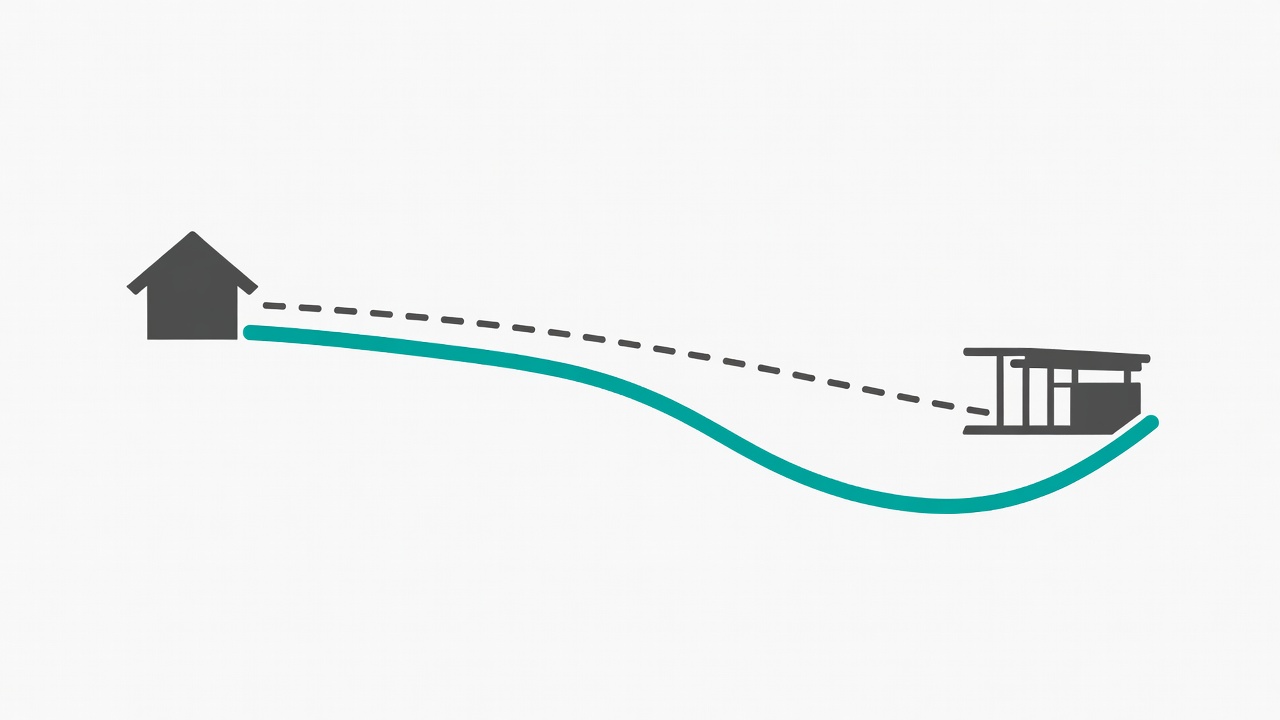
Protected lanes, shared mobility, station parking and low-traffic streets can make short journeys more practical, but their usefulness depends on continuity. A promising facility can lose much of its value at one difficult crossing. When reading about a city’s latest mobility project, ask whether it connects destinations, preserves accessibility and provides clear rules—not simply how many vehicles or kilometres are announced.
For a personal trial, record door-to-door time, carrying effort, cost and how dependable the return feels. Include unlocking, parking and transfers rather than counting only moving time. The result may support a scooter for one leg, a walking connection on another day or a different mode entirely. A better commute is an arrangement you can repeat calmly, not a route you have to defend.